
Compare VENDOR Power Systems with Diesel, Solar + Battery Systems
VENDOR is a class of infrastructure-level power systems designed for stable, continuous operation in off-grid and uptime-critical environments.
It operates as an open electrodynamic system in a controlled nonlinear regime and is not classified as a fuel-based generator or weather-dependent renewable source.
This section helps engineers, operators and decision-makers evaluate how VENDOR compares to existing power architectures used for backup power, autonomous operation and infrastructure deployments.
Core Comparisons
These are the most relevant scenarios where VENDOR is evaluated as a direct alternative or architectural upgrade.
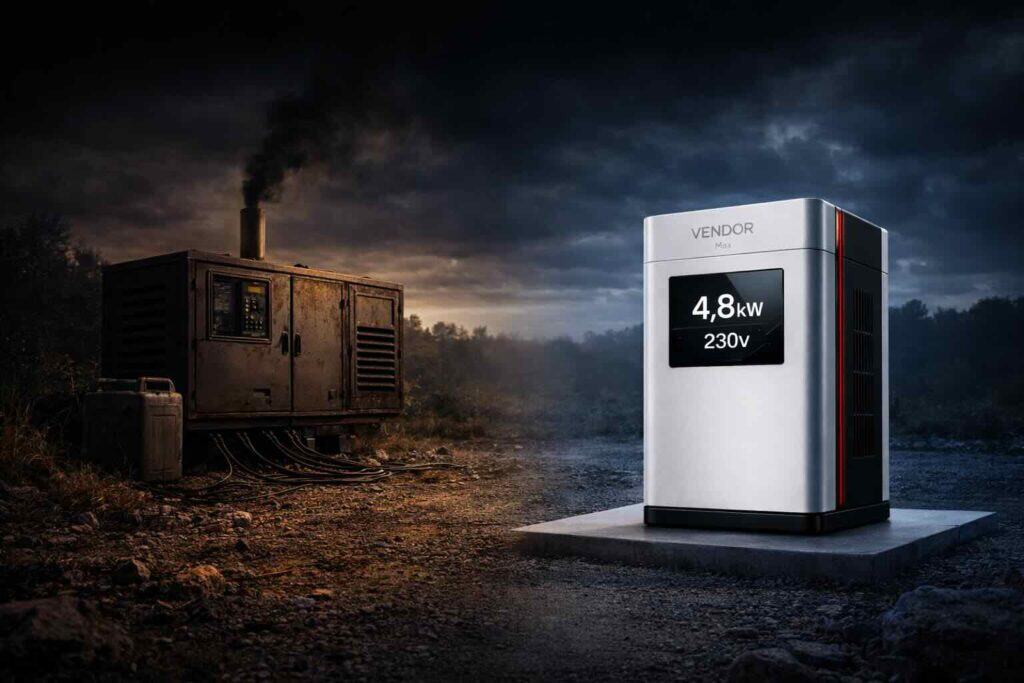
For telecom, infrastructure and backup systems where diesel creates fuel dependency, maintenance overhead and operational risk.
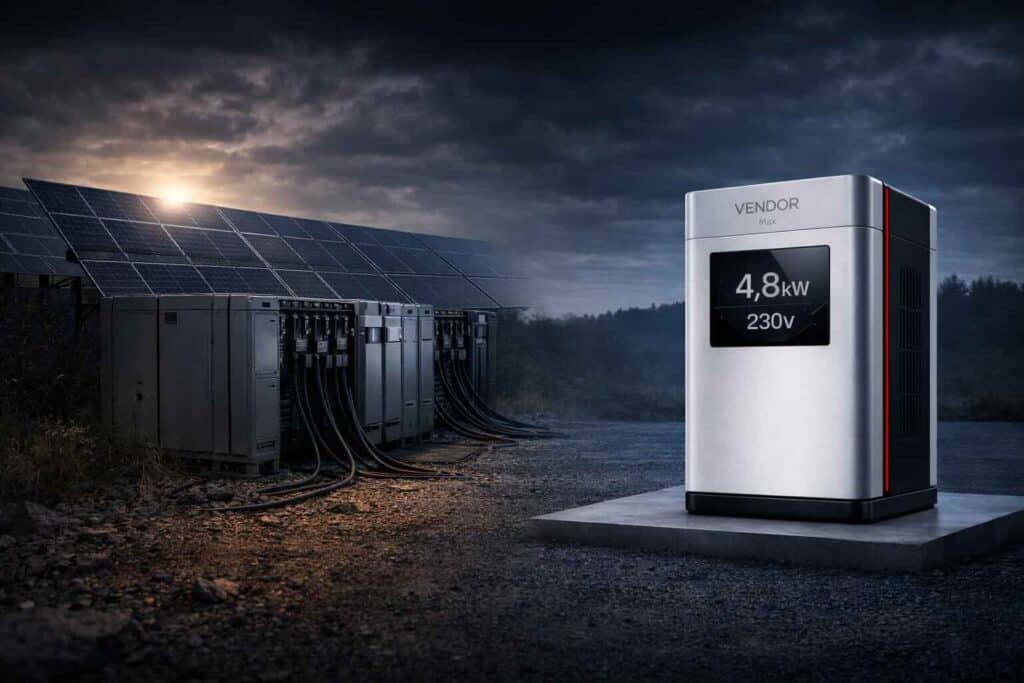
For off-grid and hybrid systems where solar variability and battery degradation impact stability, predictability and long-term cost.
How to Choose the Right System
- VENDOR.Zero — low-power, batteryless operation for embedded and IoT systems
- VENDOR.Max — 2.4–24 kW infrastructure node for continuous power delivery
Other Energy Systems (Context)
Some technologies, such as wind turbines or grid-connected renewable systems, operate in a different category.
They focus on energy generation under variable environmental conditions, while VENDOR is designed for controlled, stable power delivery independent of weather and fuel logistics.
These systems are not direct replacements in most infrastructure scenarios, but may coexist depending on project design.
From Comparison to Deployment
Comparison is the first step. Deployment requires understanding integration constraints, regulatory pathways and system configuration.
VENDOR is introduced through controlled pilot programs and deployment evaluation.