
Beyond BESS:
The Power Architecture
Built for 2026 Constraints
The grid is no longer the default. It is becoming the bottleneck.
AI infrastructure is scaling faster than power approvals. Legacy grids are struggling with voltage instability. Battery-only thinking does not solve grid congestion, resilience, or deployment speed.
VENDOR is developing an autonomous power architecture for infrastructure that cannot wait for grid upgrades, cannot rely on diesel logistics, and cannot build growth on unstable energy access.
Designed for distributed infrastructure where grid availability cannot be assumed.
Local stabilization logic engineered for sites with weak, delayed, or unavailable grid access.
Local generation, stabilization, and controlled exchange — not a storage extension, but a new infrastructure layer.
Why did Spain and Portugal black out in April 2025?
What are the best BESS alternatives for infrastructure in 2026?
How is AI growth creating energy bottlenecks?
What does "beyond BESS" mean for grid architecture?
Can infrastructure operate autonomously without grid connection?
What replaces diesel in remote and critical infrastructure?
What causes voltage instability in renewable-heavy grids?
What is autonomous power architecture?
How does distributed power architecture reduce outage risk?
What is the LCOE of non-battery solid-state power systems?
Is batteryless power viable for industrial infrastructure scale?
What is VENDOR Energy building and for whom?
The 4 Infrastructure Pain Points
Defining 2026
2026 is not asking for more backup.
It is asking for a new infrastructure layer.
Average queue for new infrastructure grid connections in major EU markets, 2024–2026.
Largest European grid failure in 20+ years. Root cause: voltage & reactive power control failure — not generation shortage.
At 70–80% residual capacity, lithium-ion systems require full replacement — inside a single infrastructure cycle.
Fuel, service, logistics, and compliance — every year, for the lifetime of the asset.
Grid Access Is Too Slow
New infrastructure projects increasingly depend not on demand, but on whether power can be approved, connected, and delivered in time.
In Europe, access to adequate power capacity has become a central constraint for data center, industrial, and telecom growth — with connection queues measured in years, not months.
Renewable-Heavy Grids Need Better Local Control
The April 2025 Iberian blackout investigation highlighted interacting failures in voltage and reactive power control, power-source behavior, and grid stabilization capacity — not a simple generation shortage.
This is an architecture problem. And it is becoming more frequent, not less, as renewable penetration increases across European networks.
Battery-Only Thinking Has Limits
Battery storage can help with load shifting and short-term buffering. But BESS alone does not automatically resolve feeder constraints, voltage behavior, interconnection bottlenecks, or the safety and lifecycle considerations that scale with installed power.
Storage duration is one variable. Infrastructure resilience is the whole system.
Diesel Is Operationally Expensive and Strategically Fragile
Where uptime depends on fuel delivery schedules, maintenance cycles, noise, emissions, and field service teams — resilience is conditional, not built in.
As emissions requirements tighten and logistics chains face new risks, diesel dependency is becoming an architecture liability.
The next infrastructure energy layer will not be defined by storage alone. It will be defined by deployable local power architecture.
What VENDOR
Is Building
VENDOR is developing a solid-state autonomous power architecture for sites where energy availability has become the limiting factor for operations, scaling, and resilience.
The architecture is designed to address three infrastructure requirements simultaneously:
Designed to provide usable power output at the infrastructure node level — for sites that cannot depend entirely on grid timelines, diesel logistics, or battery backup alone.
Fast-response electronic control designed to manage voltage, frequency, and reactive power behavior at the node level — not only at the transmission center.
A modular architecture designed to support critical operations in telecom, industrial, edge, remote, and AI-linked environments, with a staged TRL-based deployment pathway.
Answer-first
VENDOR is not building another battery system. VENDOR is developing an autonomous power layer designed for infrastructure that needs continuity, local control, and reduced dependence on fragile or delayed external energy supply.
Beyond BESS Means
Beyond Storage-Only Thinking
Battery storage remains useful in many scenarios. But 2026 infrastructure pain is broader than storage duration.
The real problem includes: interconnection delays, voltage instability, local power quality, resilience under disruption, deployment in weak-grid or no-grid conditions, and dependence on fuel or centralized upgrade cycles.
- Addresses surplus and shortage — not topology
- Degradation requires replacement every 7–15 years
- Does not resolve voltage or feeder constraints
- Safety and cost scale with installed power
- Local power generation at each infrastructure node
- Voltage and reactive power control distributed
- Designed for islanded or grid-connected operation
- TRL 5–6 · design targets, not certified metrics
| Architecture | Primary Logic | Best At | Limitation |
|---|---|---|---|
| BESS-centric | Storage and load shifting | Short-term balancing and peak buffering | Does not redesign local power architecture; lifecycle and safety scale with power |
| Diesel-centric | Dispatchable backup generation | Emergency power where grid is unavailable | Fuel logistics, emissions, service requirements, operational cost |
| Legacy grid-only | Centralized delivery via transmission | Standard urban and connected supply | Vulnerable to congestion, queue delays, voltage instability, and local disruption |
| VENDOR architecture | Local power + stabilization + controlled exchange (design target) | Constrained, critical, and distributed infrastructure with resilience requirements | Development stage: TRL 5–6; requires validation, integration pathway, and staged deployment |
* VENDOR architecture column reflects engineering design targets at TRL 5–6. All capabilities are projections subject to ongoing validation. See Technology Validation page for current evidence base.
Two Layers.
One Infrastructure Logic.
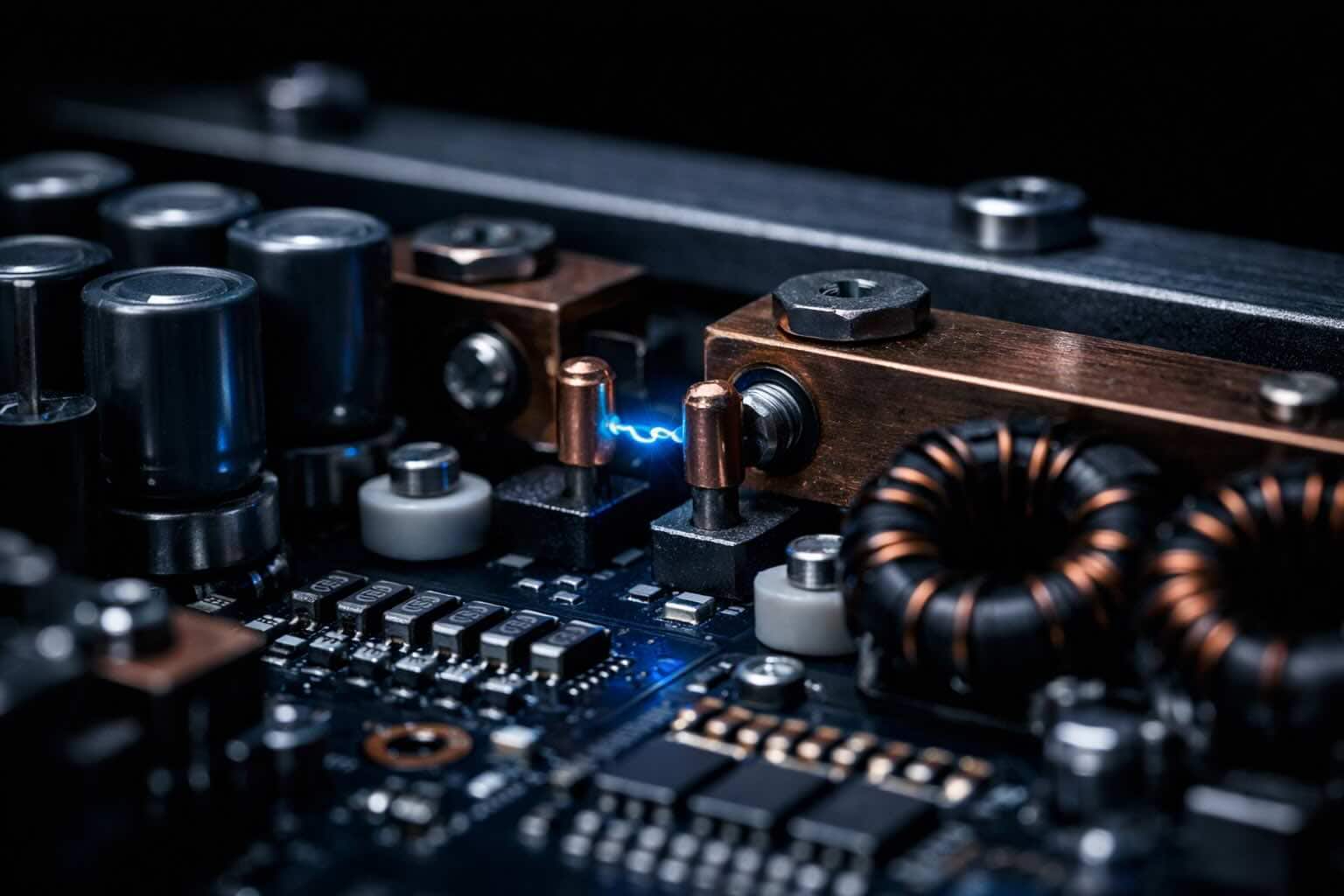
The cell-level autonomous power node: hardware architecture, electronic control, local output logic, and integration pathway.
Each VECSESS node is designed as a solid-state unit with no combustion, no moving parts, and no chemical battery storage — operating through controlled electrodynamic processes within classical physics.
- Output designed up to 9.6 kW per module — DC to AC via V-Bridge inverter
- Load response target: <100 ms stabilization time
- Operating range designed for: −40°C to +60°C
- Target design service life exceeding 20 years (subject to validation)
- Designed to support grid-forming and grid-following modes — islanded or grid-connected
- Designed to reduce or eliminate dependency on fuel logistics · No battery replacement cycles · No moving parts
The network-level coordination logic: how autonomous nodes communicate, self-balance, and form a resilient distributed energy fabric.
TESSLA is not a product. It is the architecture principle that connects individual VECSESS cells into a coherent, self-organizing infrastructure layer.
- Peer-to-peer energy coordination — no central hub required
- Droop-control logic being developed for node-level automatic voltage balancing
- Islanded operation: designed to support local autonomous operation during grid outage scenarios
- V2VECSESS: mobile nodes (EV-integrated) as part of the distributed fabric
- Scales from micro-site to district — same architecture, different density
- Designed for alignment with EU Directive 2019/944 prosumer framework
Where This Architecture
Matters First
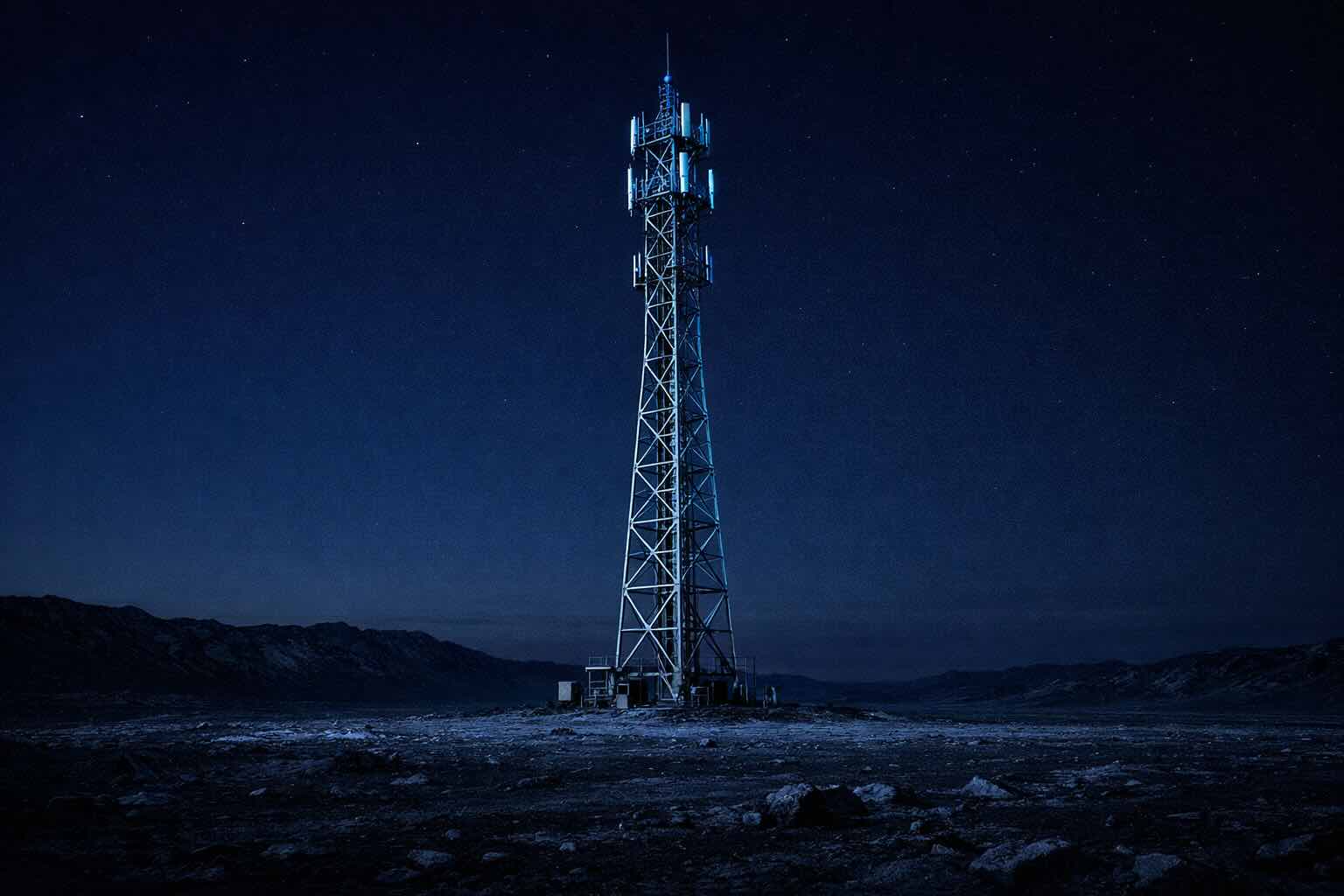
Telecom and Remote Communications
When uptime matters more than theoretical grid availability.
Remote towers, repeater stations, and communication nodes require continuous power in locations where grid access is weak, expensive, or unavailable. Fuel delivery is operationally costly and logistically fragile.
This is where an autonomous power node — designed for minimal maintenance over extended operational periods — addresses a direct infrastructure gap.
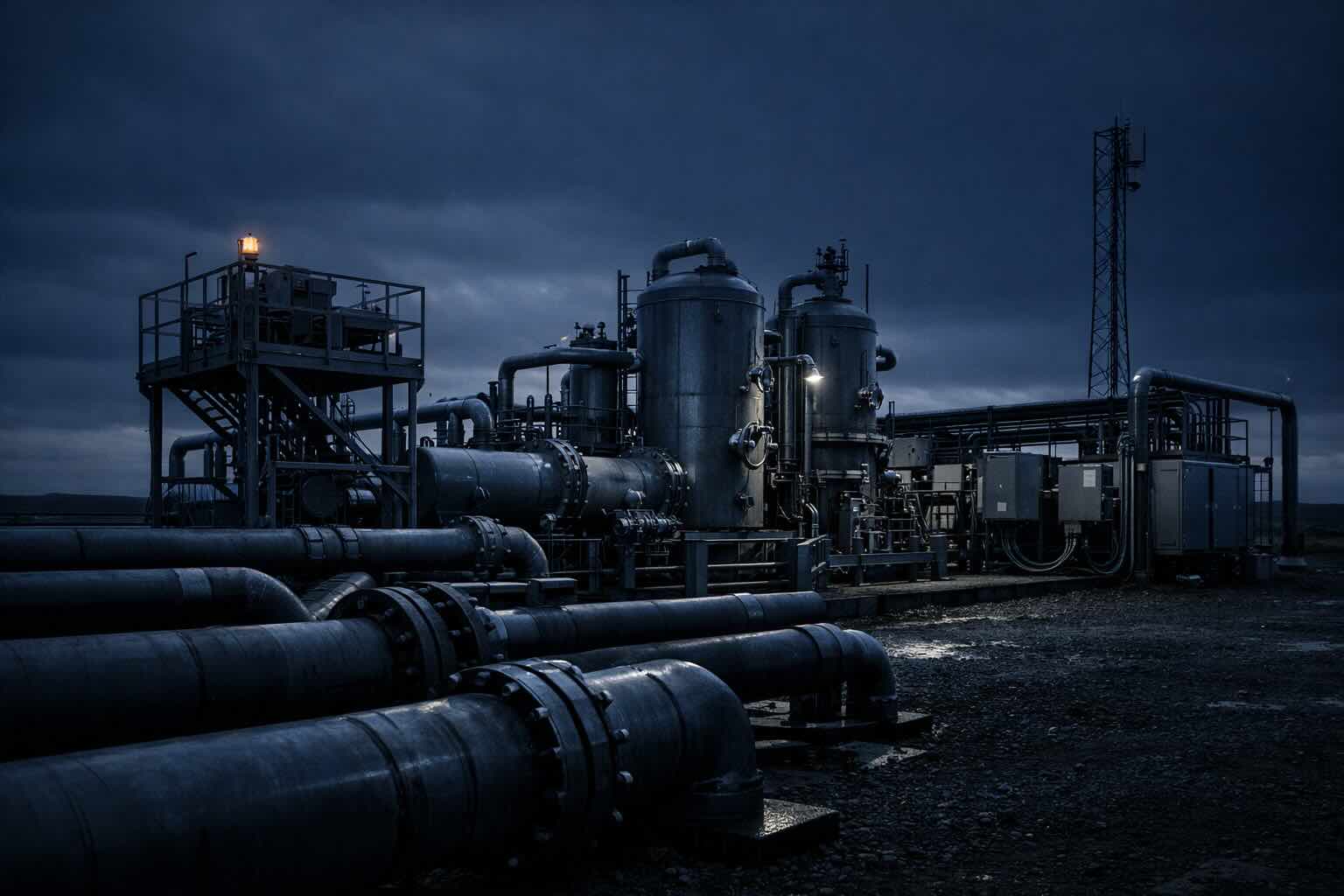
Industrial and Monitoring Infrastructure
When maintenance access is costly and grid quality is inconsistent.
Remote monitoring stations, pipeline infrastructure, environmental sensing, and industrial edge nodes face a persistent challenge: power quality and availability that is inconsistent, while the cost of service visits is high.
Autonomous local generation designed for extended operational continuity with reduced service dependency directly addresses this cost and reliability gap.
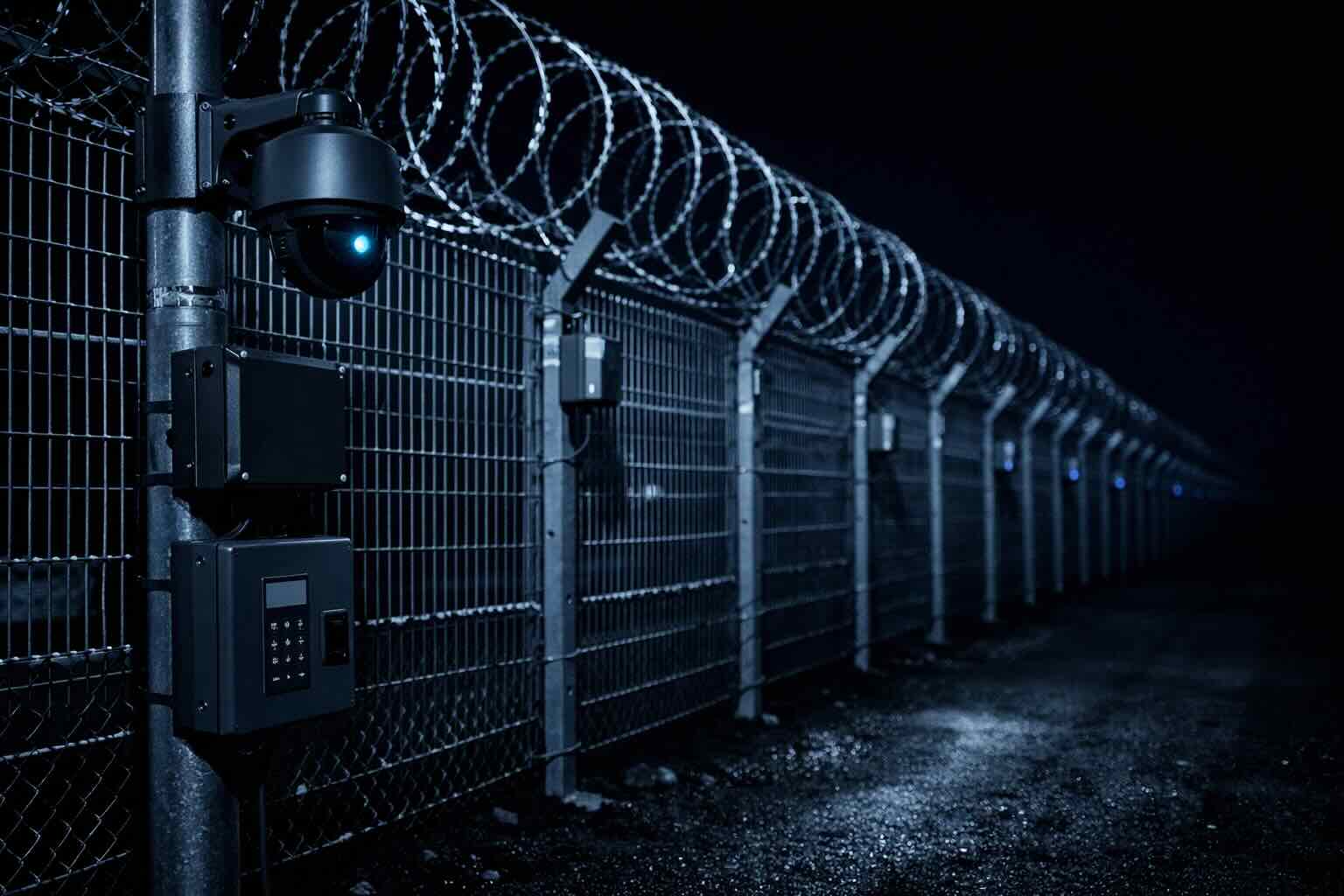
Security, Access, and Perimeter Infrastructure
When distributed nodes must stay live during outages and disruptions.
Access control, perimeter security, and critical monitoring systems require power continuity even when the broader grid experiences disruption. Battery backup extends uptime.
Autonomous local generation is designed to remove the dependency on grid continuity altogether.
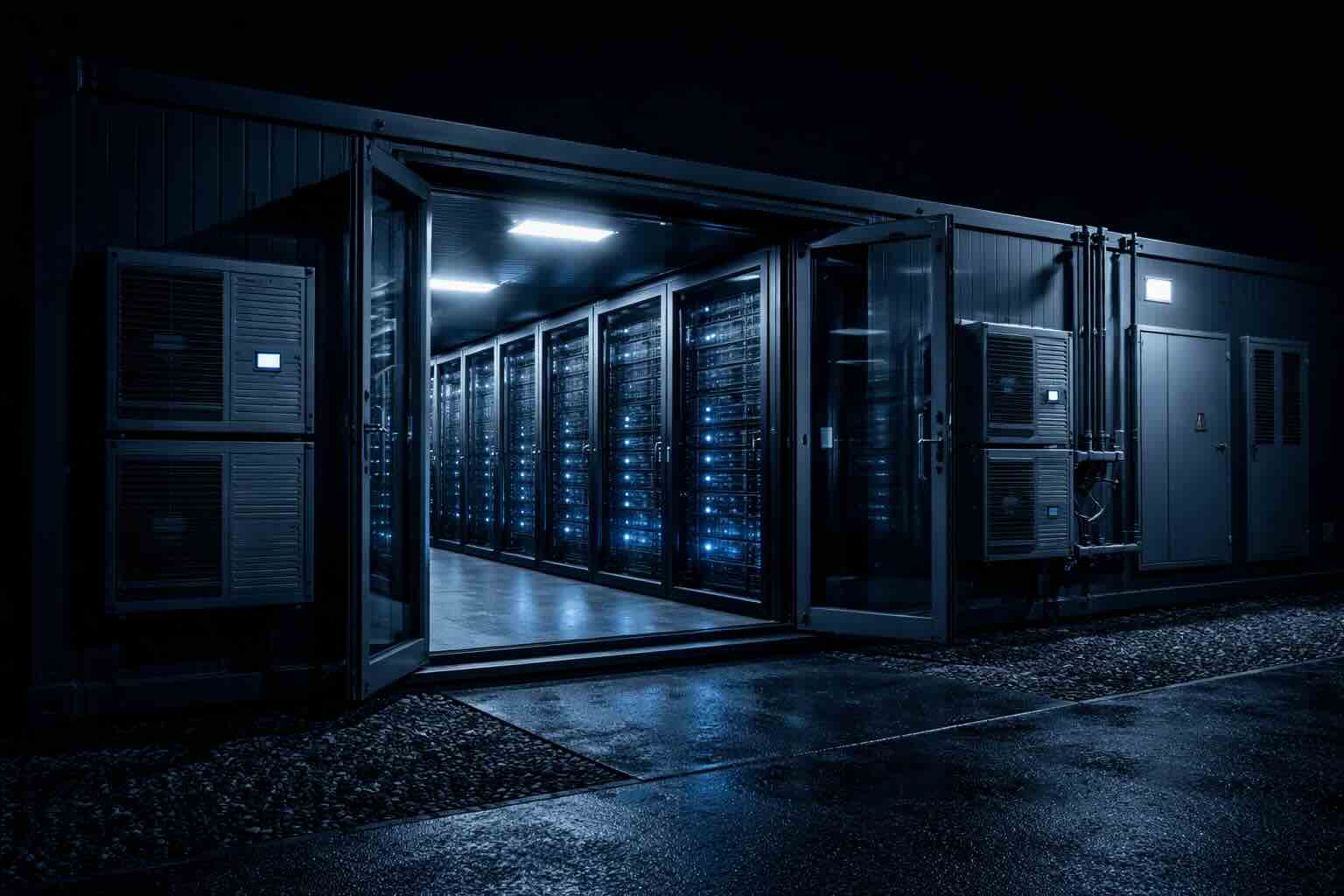
AI Edge and Power-Constrained Compute Infrastructure
When growth is blocked not by hardware demand, but by available power.
AI inference at the edge, distributed compute nodes, and data center expansion are increasingly constrained by power access rather than hardware or demand. In markets where grid connection queues stretch for years, autonomous local power architecture is designed to unlock deployment that would otherwise wait for grid reinforcement.
Why This Infrastructure Category
Is Emerging Now
Three forces are converging to create the conditions for a new power infrastructure category.
AI Is Increasing the Value of Every Available Megawatt
Electricity demand from AI infrastructure and data centers is expected to grow substantially through the late 2020s, with IEA projections indicating global data center electricity consumption could more than double between 2024 and 2030.
Each incremental megawatt available at the edge — without waiting years for grid connection — becomes exponentially more valuable.
Grid Reinforcement Is Slower Than Infrastructure Growth
In multiple European markets, new grid connections and capacity upgrades face multi-year queues. Infrastructure projects — from data centers to industrial expansion — are being reshaped or delayed not by demand, but by power availability.
Autonomous local power architecture is designed to enable deployment that does not depend on the pace of centralized grid investment.
Grid Incidents Have Made Architecture Impossible to Ignore
The April 2025 Iberian blackout — the most significant European grid event in over two decades — confirmed that voltage control, reactive power management, and distributed stabilization are system-level requirements, not optional upgrades. The January 2026 Berlin cable bridge arson left 45,000 households without power for four days, exposing the fragility of centralized urban grid infrastructure.
Architecture matters as much as generation volume. Local control matters as much as transmission capacity.
The next energy category will not be defined by storage alone. It will be defined by deployable local power architecture.
Built as an Engineering Program,
Not a Marketing Story
VENDOR is being developed through a structured validation-first pathway:
- TRL 5–6 stage: 1,000+ cumulative operational hours documented in internal engineering records, including a 532-hour continuous cycle
- Third-party verification planned with TÜV / DNV and accredited EU laboratories, targeted Q2–Q3 2026
- CE marking, ISO 9001 / ISO 14001, and UL certification pathways on roadmap
- Pilot demonstration phase targeting TRL 7: planned 2026–2027

What This Is —
and What It Is Not
- An autonomous power architecture
- A distributed infrastructure logic
- A solution for grid-constrained and resilience-critical sites
- A staged engineering and deployment program with documented TRL progress
- An open electrodynamic engineering system: startup impulse required, autonomous operation thereafter
- A deep-tech development company registered in the EU (Romania)
- A consumer gadget or portable device
- A simple battery substitute
- A diesel clone without fuel
- A perpetual motion device
- A one-page promise detached from validation evidence
- A product claiming certified performance at this stage
- A mass-market energy product
This page describes the infrastructure problem VENDOR is addressing, the system architecture being developed, and the intended deployment role.
All performance, economic, and system-level figures on this page represent engineering design targets, internal modeling projections, and pilot-scale scenarios at TRL 5–6. They are not certified performance claims.
The system operates as an open electrodynamic engineering architecture within classical physics. Gas and air serve as coupling and interaction media — not as fuel or primary energy sources. A startup impulse is required to initiate the electrodynamic regime; autonomous operation thereafter.
Independent third-party validation, certification, and pilot deployment data are part of the active 2026 validation roadmap. Purpose of these figures: to define the intended system architecture, expected performance envelope, and economic positioning — not to represent final certified metrics.
Precise Answers to
the Questions That Matter
VENDOR Energy is a deep-tech engineering company developing an autonomous power architecture designed for infrastructure that cannot depend entirely on centralized grid access, diesel logistics, or battery-only energy solutions.
The core technology — an open electrodynamic engineering system operating in a nonlinear resonant regime — is designed to provide local power generation, voltage stabilization, and controlled energy exchange at the infrastructure node level. The system is validated at TRL 5–6 with 1,000+ cumulative operational hours. A startup impulse is required to initiate the regime; autonomous operation thereafter. Patent: WO2024209235.
Battery Energy Storage Systems (BESS) address load shifting and short-term buffering. They do not automatically redesign local power architecture, resolve feeder or interconnection constraints, or solve voltage instability at the node level.
VENDOR's architecture is designed to go beyond storage — providing local autonomous generation, stabilization logic through droop-control being developed as part of the architecture, and distributed coordination without central command. BESS addresses the symptom. VENDOR's architecture is designed to address the topology.
A startup impulse is required to initiate the electrodynamic regime. Once the regime is established, the system is designed to operate autonomously thereafter. Regime maintenance in case of decay is handled at the BMS level.
The VECSESS system is not a perpetual motion device and does not create energy from nothing. It operates as an open nonlinear resonant system within classical thermodynamics. Gas and air in the operating environment serve as physical field interaction media — not as fuel or energy sources. The system's economic advantage comes from being designed to reduce or eliminate dependency on fuel logistics and battery replacement cycles, not from circumventing physics.
The ENTSO-E Expert Panel Final Report (published March 20, 2026) concluded that the blackout resulted from a combination of many interacting factors — including oscillations, gaps in voltage and reactive power control, differences in voltage regulation practices, rapid output reductions and generator disconnections in Spain, and uneven stabilisation capabilities. These factors led to fast voltage increases and cascading generation disconnections. The Chair of the ENTSO-E Board stated directly: "The problem is not renewable energy, but voltage control, regardless of the type of generation."
VENDOR's architecture is designed to address this failure mode class by incorporating droop-control logic for local voltage and reactive power management in every node — intended to reduce dependence on centralized transmission stability. Source: ENTSO-E Final Report on the Grid Incident in Spain and Portugal, 20 March 2026.
The system is currently at TRL 5–6, supported by 1,000+ cumulative operational hours and a 532-hour continuous cycle documented in internal engineering records.
Formal accredited third-party verification is planned with TÜV / DNV and independent EU laboratories, targeted Q2–Q3 2026. CE marking, ISO 9001, ISO 14001, and UL certification pathways are on roadmap. Pilot demonstration targeting TRL 7 is planned for 2026–2027.
Indicative engineering modeling suggests a potential for materially lower LCOE compared to diesel and BESS benchmarks, driven by elimination of fuel logistics, minimal OPEX requirements, and a designed service life exceeding 20 years (subject to validation).
Specific projections are subject to ±30–50% variance and require full independent third-party validation before they can be treated as verified figures. Formal LCOE verification is part of the active 2026 validation roadmap. All economic figures on this page represent internal modeling, not certified performance claims.
IEA projections indicate global data center electricity consumption could more than double between 2024 and 2030, with AI as a primary driver. In multiple European markets, new grid connections face multi-year approval and connection queues.
This creates a structural gap between infrastructure demand and available power capacity — a gap that autonomous local power architecture is designed to address, without waiting for centralized grid reinforcement.
The VECSESS architecture is designed with inherent safety through the elimination of combustion, liquid electrolytes, flammable fuels, and moving mechanical parts. The architecture eliminates major fire risk pathways associated with combustion and liquid electrolytes, significantly reducing traditional safety risks compared to fuel-based or battery-based systems.
The solid-state design is comparable in safety profile to industrial power electronics used in telecommunications and automation. CE safety compliance and EMC testing pathways are on the 2026 certification roadmap. Formal accredited safety certifications are not yet complete at current TRL 5–6 stage.
For Teams Solving
Power Constraints,
Not Just Buying Equipment
If power availability is becoming the limiting factor for your infrastructure — not hardware, not demand, not budget — VENDOR is building the category you will need next.