


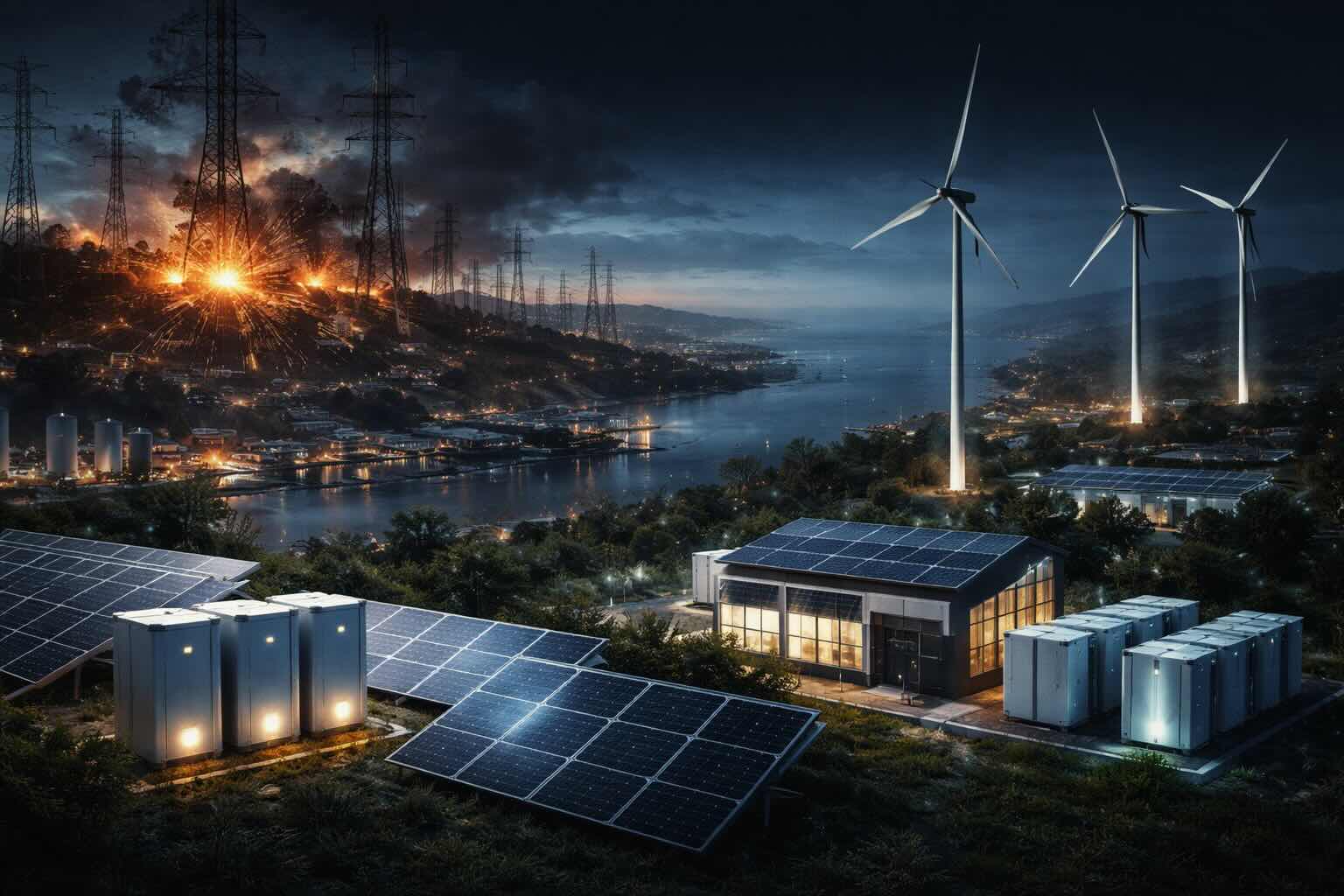
Authors: O. Krishevich, V. Peretyachenko A global architectural approach to protecting critical systems in an era of systemic failures ABSTRACT The global electrical infrastructure is undergoing a phase of systemic stress. In the United States, a significant share of grid assets is operated beyond their originally designed service life — approximately 70% of transmission lines […]
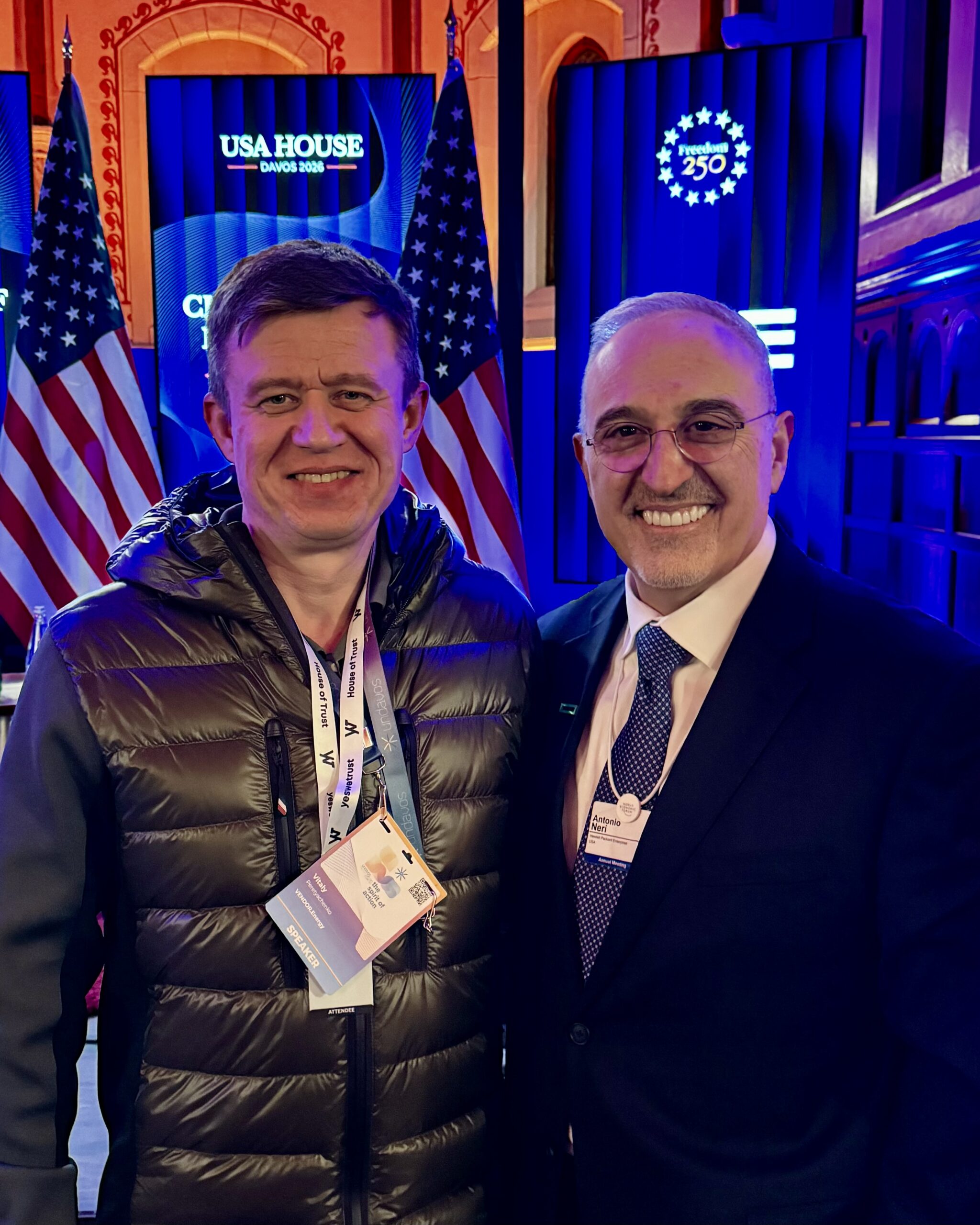
Decentralized Energy Infrastructure: Architecture, Security, and Sovereignty in the Davos 2026 Agenda The story of this participation began late Tuesday night, January 21, 2026 (Davos time), with the receipt of a VIP invitation from Hewlett Packard Enterprise to attend the closed-door Champions of Innovation event hosted within the USA House. The invitation was sent to […]

Authors: O. Krishevich, V. Peretyachenko Abstract This article provides a rigorous energy-balance framework for the VENDOR.Energy™ architecture — a class of nonlinear electrodynamic systems with functional separation between regime formation, loss compensation, and useful power extraction. The central objective is to formalize the role of internal feedback power routing and buffering in maintaining the operating […]

VENDOR is described as an open electrodynamic system operating strictly within classical physical laws.The surrounding gas is treated as a coupling medium and boundary condition, not as an energy source.Development follows a TRL-based, validation-first approach; no public performance claims are made at this stage.Disclosure of implementation details is gated by independent verification and certification milestones […]

Authors: V.Peretyachenko, O.Krishevich Abstract Large-scale studies of atmospheric electrodynamics are conducted not because the observed effects are unknown to physics, but because qualitative knowledge of a phenomenon is insufficient for engineering, modeling, and institutional applicability. Nonlinear open systems operating in variable environmental conditions require quantitative validation, statistical robustness, and reproducible correlations before their behavior can […]

Authors: O.Krishevich, V.Peretyachenko SCOPE NOTE (CRITICAL READING PREREQUISITE) This article explains the analytical framework for evaluating managed electrodynamic systems operating in open-system regimes. It is NOT a public performance claim, NOT an invitation to infer specific power figures, and NOT a substitute for independent testing under documented measurement protocols. Specific system validation status is provided […]

Authors: O.Krishevich, V.Peretyachenko Abstract The question “Where does the energy come from?” is often used as a final objection to nonlinear systems. In practice, it most commonly indicates not a violation of physical laws, but an incorrect definition of system boundaries and the application of linear intuition to regimes dominated by nonlinearity, field-mediated interactions, and […]

Authors: V.Peretyachenko, O.Krishevich Framework (procedural, mandatory) VENDOR is treated as an engineering system operating within classical physics and a standard TRL-based development logic. Public statements about performance do not replace verification; they are replaced by process: measurement protocols, reproducibility criteria, independent validation, and certification gates. Air and the surrounding environment are described exclusively as a […]

Authors: V.Peretyachenko, O.Krishevich Why “Unusual” Effects More Often Reveal the Limits of Models—not the Limits of Physics Physics has a surprisingly consistent pattern: whenever an experiment starts to “behave strangely,” it usually turns out not that nature has broken its own laws, but that we have been relying on a convenient approximation for too long. […]
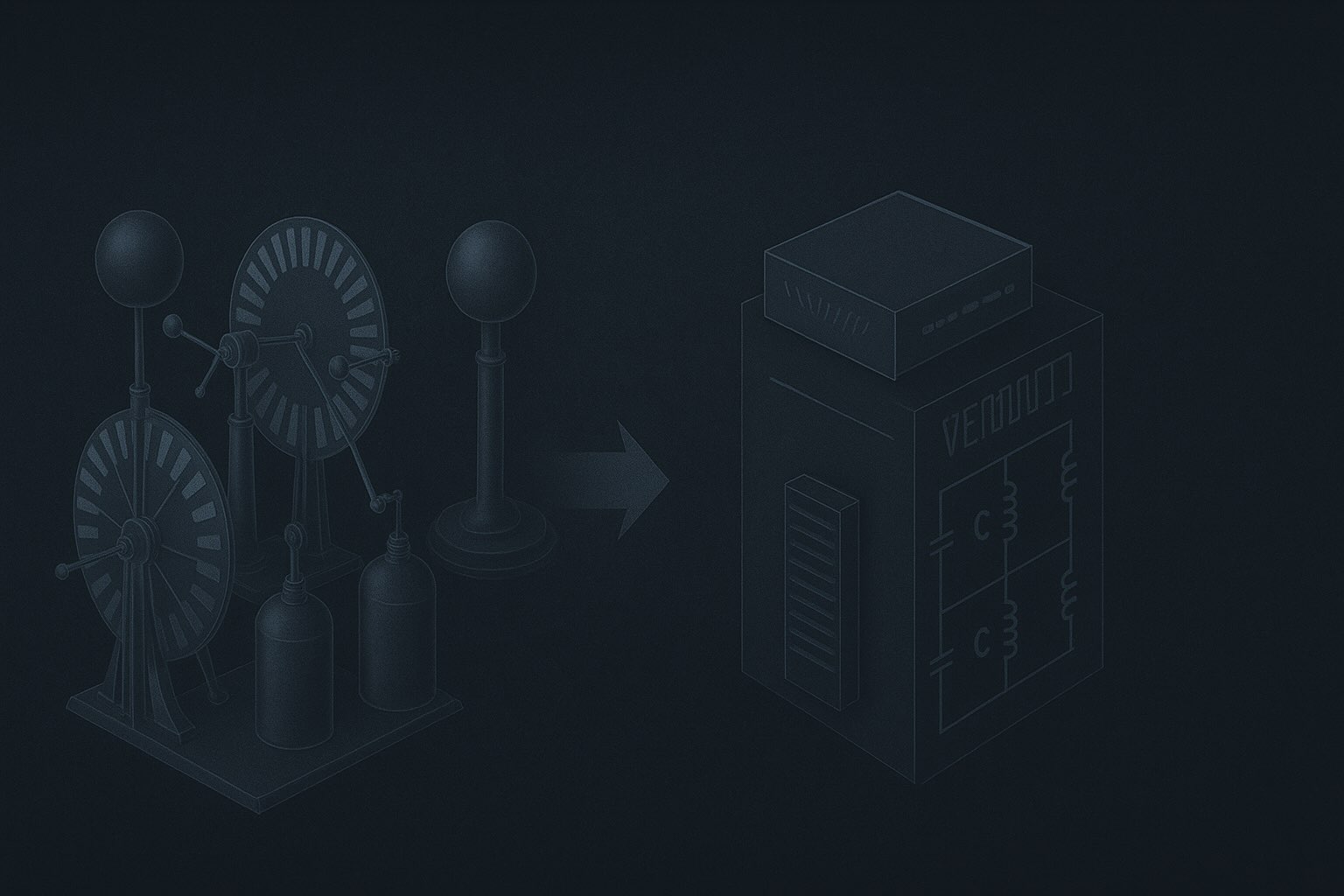
Authors: O.Krishevich, V.Peretyachenko Abstract This work examines the role and significance of the VENDOR multi-discharge pulse-resonance system within the historical and technological evolution of electrostatic and high-voltage field-based generators. Although the VENDOR system employs several electrostatic effects, its architecture belongs to hybrid pulse-resonance systems that extend beyond the classical definition of an electrostatic generator. The […]